The Gentle Way
What is Judo?
Judo, meaning “the gentle way” or “the way of giving way”, is a Japanese martial art and sport created by Dr. Jigoro Kano in 1882. Kano refined the ancient fighting system of Jujutsu into a modern discipline built on two core principles.
Two Core Principles
01
Maximum Efficiency, Minimum Effort
Use technique and timing to throw an opponent while expending minimal physical strength. Mastery of leverage and body mechanics replaces brute force.
02
Mutual Welfare and Benefit
Although judo is physically demanding, applying its principles to everyday life enables individuals to translate the concepts of maximum efficiency and “giving way” into mutual aid — resulting in greater harmony among people.
Safe Enough to Practice at Full Speed
By eliminating dangerous Jujutsu techniques such as kicking, punching, and small joint locks, Kano created a system where techniques could be practiced at full speed with minimal injury risk. The preserved techniques include a large variety of throws and ground control methods — pins, chokes, and arm locks.
Students first master ukemi — the art of falling properly — enabling daily training without long recovery periods between sessions.
An Olympic Sport Since 1964
Judo became a sanctioned Olympic sport beginning with the 1964 Tokyo Olympics. Points are awarded for throwing or pinning an opponent, or by forcing a submission via choke or arm lock. Countless levels of competition are available for players of all experience levels.
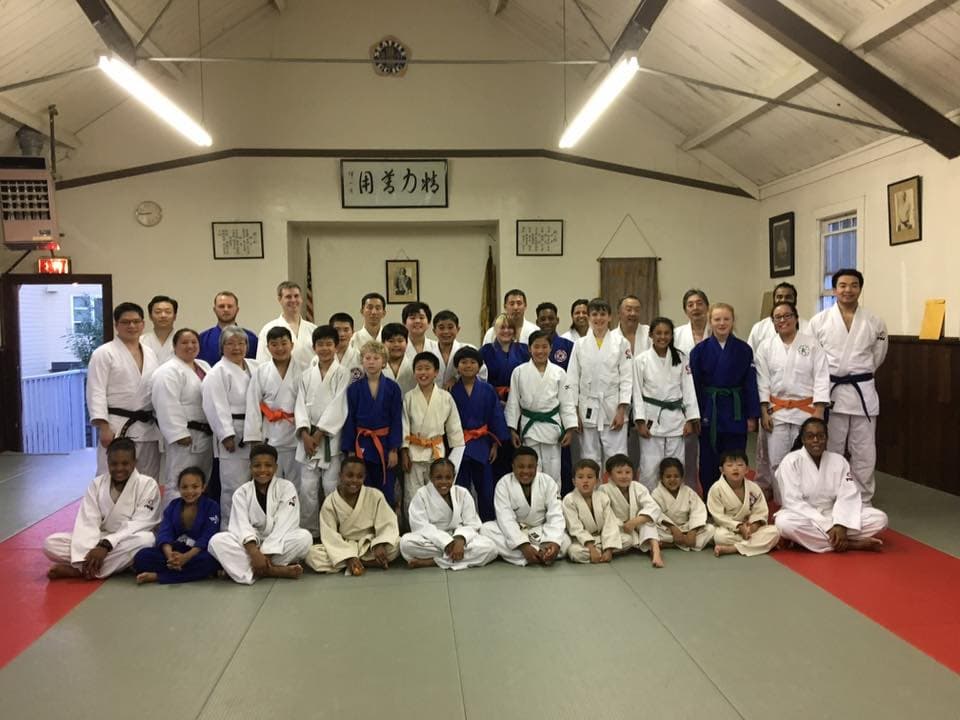
Whether practiced for exercise, recreation, competition, self-defense, or as a life philosophy, judo is enjoyed year-round by women and men, boys and girls of all ages.
Try Judo at Seattle Dojo